Quick answer
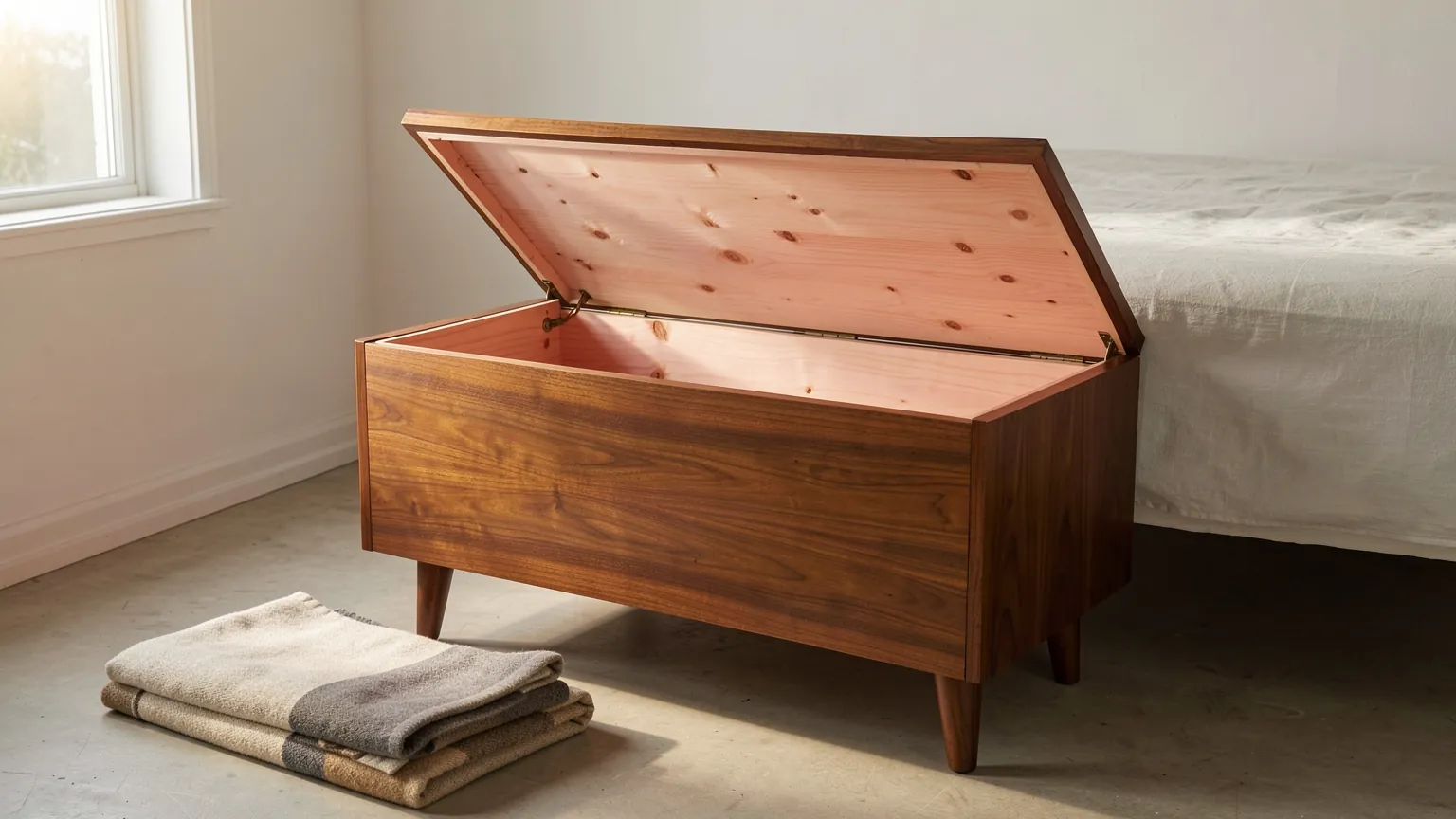
Most vintage Lane cedar chests are worth a few hundred dollars, not thousands. Two guides written six years apart, Hunker in 2018 and 1stDibs in 2024, both put the typical figure at $200 to $400. Plain, worn or refinished chests sell for less, and early, rare or unusually styled chests in very good original condition sell for more. Lane made around 12 million chests between 1912 and 1987 alone, so supply is large. What makes one chest worth more than another is its age, style, condition and the state of its cedar lining.
Before you sell or use one: remove the lock
The old Lane latches lock automatically when the lid shuts and cannot be opened from inside. Children have suffocated in these chests. The US Consumer Product Safety Commission urges owners of Lane and Virginia Maid chests made from 1912 to 1987 to remove the latch and lock. Lane recalled 12 million chests in 1996, but replacement locks are no longer offered, so removal is now the advice. See our Lane serial number guide for details.
What a Lane cedar chest is worth: typical ranges
| Source | Date | What it says |
|---|---|---|
| Hunker | Updated March 2018 | From about $99 up to $700 or more for older chests; most between $200 and $400 |
| 1stDibs | August 2024 | Average selling price $200 to $400 |
| House Digest | January 2025 | Late mass-produced chests up to about $500; the earliest full-size chests "as much as $3,000 or more" |
Treat the top figure with caution. House Digest gives no source for $3,000, and it is far above what the other guides report. Dealer listings on sites like 1stDibs are asking prices, which are higher than what most chests actually sell for. The most reliable evidence for your chest is the sold price of similar chests, in similar condition, near you.
These figures are American. In the UK, Lane chests are uncommon and sell occasionally through general auctions and online marketplaces, so there is no settled price level.
Step one: date the chest
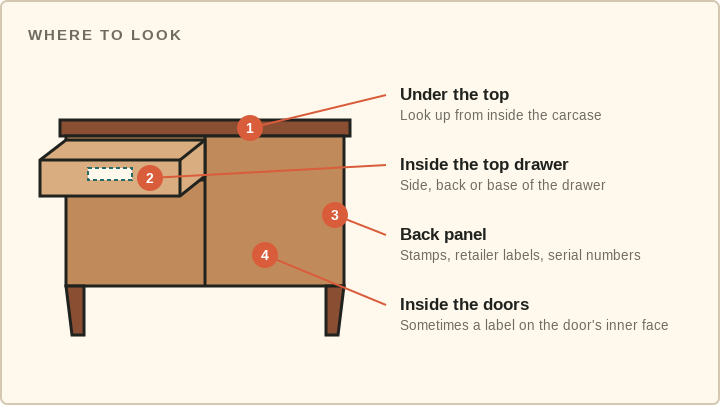
Lane stamped a serial number inside most chests, often on the base or inside the lid. Read it backwards to get the date. A chest stamped 553170 reads 07-13-55, so it was made on 13 July 1955. When the number has seven digits, the first is the plant number and the rest are read the same way. The Virginia Museum of History and Culture gives the 553170 example, and several collectors' guides use the same method.
Older guides warn that Lane used more than one numbering system, so a number that does not make sense backwards is not proof the chest is not a Lane. House Digest adds that chests made from 1912 to 1936 carry a "Made by Lane in Altavista, VA" logo.
What affects the value
- Age and rarity. Early chests and short-lived designs are scarcer than the millions of standard post-war chests.
- Style. Lane made Art Deco chests with inlaid veneers and Chippendale-style chests with ball-and-claw feet in the 1930s and 1940s, and plainer mid-century and Danish-style chests with angled legs from the 1950s. Hunker singles out the Tuxedo style as rare. Buyers of mid-century furniture pay more for clean-lined chests that fit a modern room.
- Condition. Lifting veneer, water rings, deep scratches, a damaged lid and missing hardware all reduce value.
- Original finish. Hunker says repainting or refinishing lowers value. A chest with honest wear in its original finish is usually worth more than a stripped one.
- The cedar. A sound aromatic red cedar lining with its scent is part of what buyers want. House Digest notes that some buyers look for the original cedar smell, and that cedar chips can refresh it.
- Size and extras. Full-size chests with trays, drawers or felt-lined compartments sell more readily than small plain boxes.
The lock is a special case. Some guides say chests with original locks are valued differently. Safety comes first: remove the latch whatever it does to the price. A buyer will expect it to be gone.
Miniature "Girl Graduate" chests
Lane gave small cedar boxes to girls graduating from high school, as a promotion for its full-size chests. Sources disagree on when the plan began: House Digest says 1920, while Wikipedia, citing a 2003 book on chests, describes 9-inch chests in the 1930s. These miniatures are common and are usually worth much less than a full-size chest, though a clean example with its original printed lining and the store's name has some appeal to collectors.
Lane in brief
- 1912: Edward Hudson Lane, aged 21, starts the business in a packing-box plant in Altavista, Virginia, bought at a bankruptcy sale (some accounts say his father, John Edward Lane, bought it). It becomes the Standard Red Cedar Chest Company.
- 1922: renamed The Lane Company (according to company histories), after making ammunition boxes during the First World War.
- 1930s and 1940s: heavy advertising of the cedar chest as a "hope chest", including Second World War advertisements aimed at servicemen and their sweethearts.
- 1987: Lane is bought by Interco, later Furniture Brands International.
- 1996: the lock recall.
- 2001: the last cedar chest is made in Altavista and the plant closes.
How to price your chest
- Remove the self-locking latch before anything else.
- Find the serial number and read it backwards to get the date.
- Note the style, the size, and any trays, drawers or inlay.
- Photograph the outside, inside and any damage in good light.
- Search sold listings, not asking prices, for chests of the same style and condition.
- Record what you find with the object research checklist.
Related guides
- Lane Acclaim and Lane serial numbers: reading the date code and identifying Lane's best-known mid-century line
- Veneer or solid wood?: how to read the construction of a chest
- Questions to ask before buying vintage furniture online
Common questions
How much is a Lane cedar chest worth?
Most sell for roughly $200 to $400, according to guides from Hunker (2018) and 1stDibs (2024). Worn or refinished chests fetch less, and early or unusual chests in very good original condition can fetch more.
How do I tell how old my Lane cedar chest is?
Find the serial number, usually stamped inside, and read it backwards. 553170 becomes 07-13-55, or 13 July 1955. If there are seven digits, the first is the plant number.
Should I remove the lock from a Lane cedar chest?
Yes. The US Consumer Product Safety Commission urges owners of Lane and Virginia Maid chests made from 1912 to 1987 to remove the latch and lock, because they lock automatically and children have suffocated inside. Replacement locks are no longer available.
Are Lane miniature cedar chests worth anything?
Usually only a little. Lane gave them away in large numbers to graduating girls as a promotion. Clean examples with their original lining and store name have some collector interest.
Does refinishing a Lane chest reduce its value?
Usually, yes. Hunker says repainting or refinishing lowers value, and collectors generally prefer the original finish, even with wear.
References
- Edward Hudson Lane, American Home Furnishings Hall of Fame
- Lane cedar chest, Virginia Museum of History and Culture
- CPSC urges consumers to replace or remove latches/locks on Lane and Virginia Maid cedar chests, US Consumer Product Safety Commission
- Determining the value of a Lane cedar chest and Lane cedar chest styles, Hunker, updated 2018
- How much is my Lane cedar chest worth?, 1stDibs, 2024
- Is your Lane cedar chest worth anything today?, House Digest, 2025
- Hope chest and Altavista, Virginia, Wikipedia