Quick answer
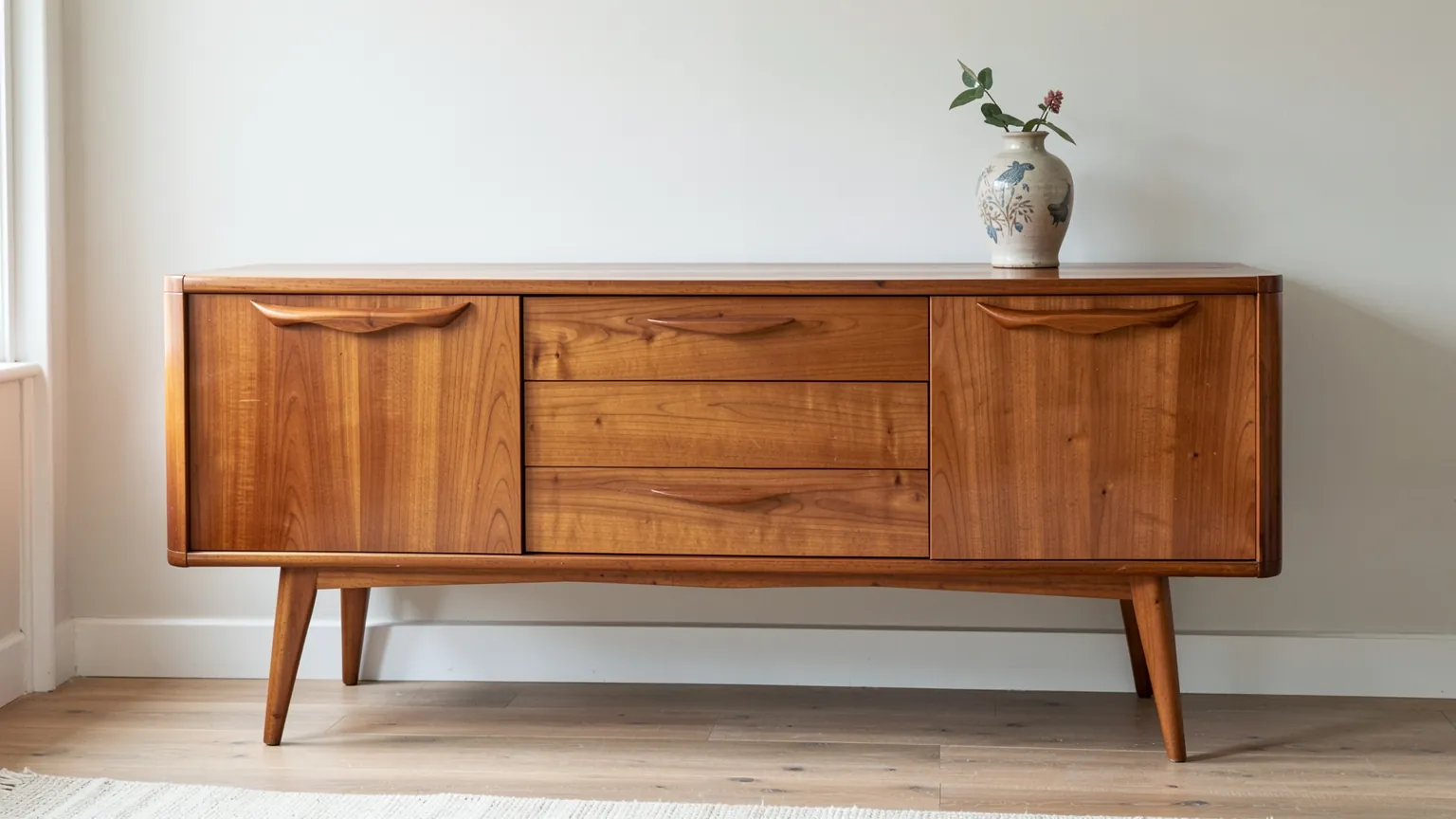
McIntosh furniture was made by A.H. McIntosh & Co. of Kirkcaldy, Fife, a Scottish firm founded in 1869. Its teak sideboards, dining tables and cabinets of the 1960s and 1970s are the pieces collectors look for. To identify one, look for a McIntosh label or tag, usually showing a thistle, inside a drawer, on the back or underneath; then check for solid teak sculpted handles, tapered legs and careful cabinet work. The best-known design is the Dunvegan sideboard by the firm's head designer, Tom Robertson.
McIntosh pieces are often mistaken for Danish furniture, which is part of their appeal and part of the reason it pays to check the label.
Key facts
| What the sources say | |
|---|---|
| Maker | A.H. McIntosh & Co. Ltd, Victoria Cabinet Works, Kirkcaldy, Fife |
| Founded | 1869, by Alexander Henry McIntosh (1835 to 1919) |
| Head designer | Tom Robertson, from 1948 to 1983 according to dealer sources |
| Main period for collectors | The 1960s and 1970s, mostly in teak, some rosewood |
| Best-known model | The Dunvegan sideboard, 1960s |
| Later history | Moved into school furniture; the business trades as ESA McIntosh |
The firm is described in listings as A.H. McIntosh, McIntosh Ltd, McIntosh of Kirkcaldy or simply McIntosh. These all refer to the same company.
Labels and tags
The sources describe McIntosh marks differently, so treat any of the following as consistent with a genuine piece:
- Thistle and crown label. Pamono describes the label that survives on many 1950s and 1960s pieces as showing the Scottish thistle and crown.
- Metal tags. 1stDibs says McIntosh used three different metal tags on most of its pieces, usually riveted to the wood rather than glued.
- Stickers. 1stDibs says newer pieces may instead carry two stickers, one round and one rectangular.
- Thistle logo and paper labels. The valuation app Relic describes a gold or silver thistle logo inside drawers or on doors, and maker's marks or paper labels underneath tables and sideboards.
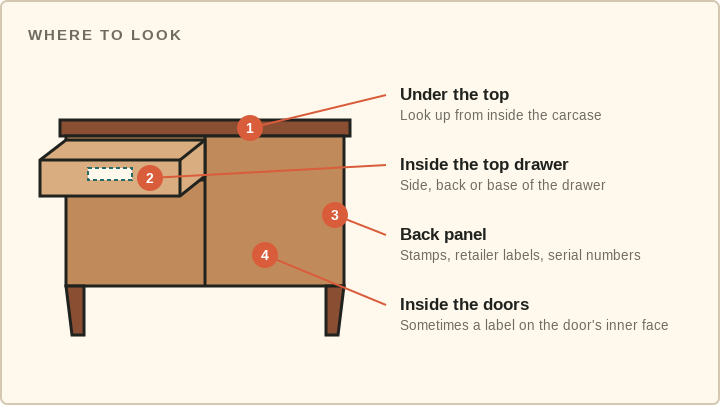
Look inside the top drawer, on the inside of the doors, across the back panel and under table tops. None of the sources sets out a full sequence of labels by date, so a label confirms the maker more reliably than it dates the piece.
No label?
Labels and stickers fall off, so an unlabelled piece can still be McIntosh. In that case the handles, the construction and a match with a documented model matter most. Be careful with "attributed to Tom Robertson": some dealers use it for pieces that only resemble his designs.
What a McIntosh piece looks like
- Teak. Mostly teak veneer over a solid frame, with solid teak for handles and edges. A smaller number of pieces were made in rosewood. See telling teak, walnut and rosewood apart.
- Handles. Sculpted solid teak handles, often running along the top edge of a drawer or carved into the door. These are the Dunvegan's signature.
- Legs. Tapered, splayed legs on most sideboards and tables.
- Fittings. Small brass locks on cabinets and wardrobes; hidden "butterfly" leaves in some extending dining tables.
- Finish. Even, well-matched veneer and neat drawer joints. Rough or mismatched work is a warning sign.
The main models
| Model | Date given in listings | Notes |
|---|---|---|
| Dunvegan sideboard | 1960s | Tom Robertson's best-known design, with sculpted handles and tapered legs; one recorded example is 202 cm wide. A slimmer version is listed as the "Slender Dunvegan" |
| Torpedo | 1960s | Sideboard |
| Dunbar | 1960s | Sideboard |
| Model A | 1960s | Sideboard |
| Moy | 1970s | Range including a small sideboard |
| Envelope | 1970s | Sideboard named for its door design |
These names and dates come from dealer listings rather than McIntosh catalogues, so treat the dates as approximate. Other recorded pieces include drinks cabinets, wardrobes, dining tables and chairs.
McIntosh in outline
Alexander Henry McIntosh founded the firm in Kirkcaldy in 1869. It built the Victoria Road Cabinet Works, which opened in 1880, and won awards at furniture exhibitions as far apart as Paris and Australia. During the First World War the factory made aircraft wings and parts. Tom Robertson was one of its award-winning post-war designers; dealer and collector sources describe him as head designer from 1948 to 1983, covering the whole period collectors care about. After a takeover in 1984 it traded as E.S.A. McIntosh, also making school furniture, and the Kirkcaldy business closed in 2016.
What it is worth
Dealer asking prices for McIntosh sideboards are commonly $2,000 to $4,000, with Dunvegan sideboards at the top of the range and some rarer models listed higher. Relic gives a typical range of $1,995 to $3,650. Prices in British auctions and shops are often lower than international dealer listings. Original handles, an intact label and a clean, unrepaired veneer make the biggest difference.
For other British makers, see our guides to G-Plan labels and Stag Minstrel. For how labels work more generally, see mid-century furniture labels and maker marks; for Danish pieces it is often confused with, the Danish control stamp. Record what you find with the object research checklist, and see collecting and buying for more.
Common questions
How do I identify McIntosh furniture?
Look for a McIntosh label or tag, often with a Scottish thistle, inside a drawer, on the back or under the top. Then check for teak with sculpted solid teak handles, tapered legs and good cabinet work.
Who designed McIntosh furniture?
Tom Robertson, one of the firm's post-war designers, is credited by dealers as head designer from 1948 to 1983 and as the designer of the Dunvegan sideboard. Not every piece credited to him by dealers is documented as his.
Is McIntosh furniture Danish?
No. It was made in Kirkcaldy, Scotland, by A.H. McIntosh & Co. Its teak designs are in the Danish modern style and are often mistaken for Danish furniture.
Is McIntosh still in business?
The company moved into school furniture and trades as ESA McIntosh. It no longer makes the teak domestic furniture of the 1960s and 1970s.
References
- A. H. McIntosh and Co, Grace's Guide to British Industrial History
- A. H. McIntosh, Kirkcaldy in 50 Objects (Kirkcaldy Civic Society, photos from Fife Cultural Trust)
- McIntosh sideboards and company history, Pamono
- How to identify McIntosh furniture, 1stDibs, 2024
- Dunvegan teak sideboard by McIntosh of Kirkcaldy, Vinterior
- McIntosh furniture value guide, Relic