Quick answer
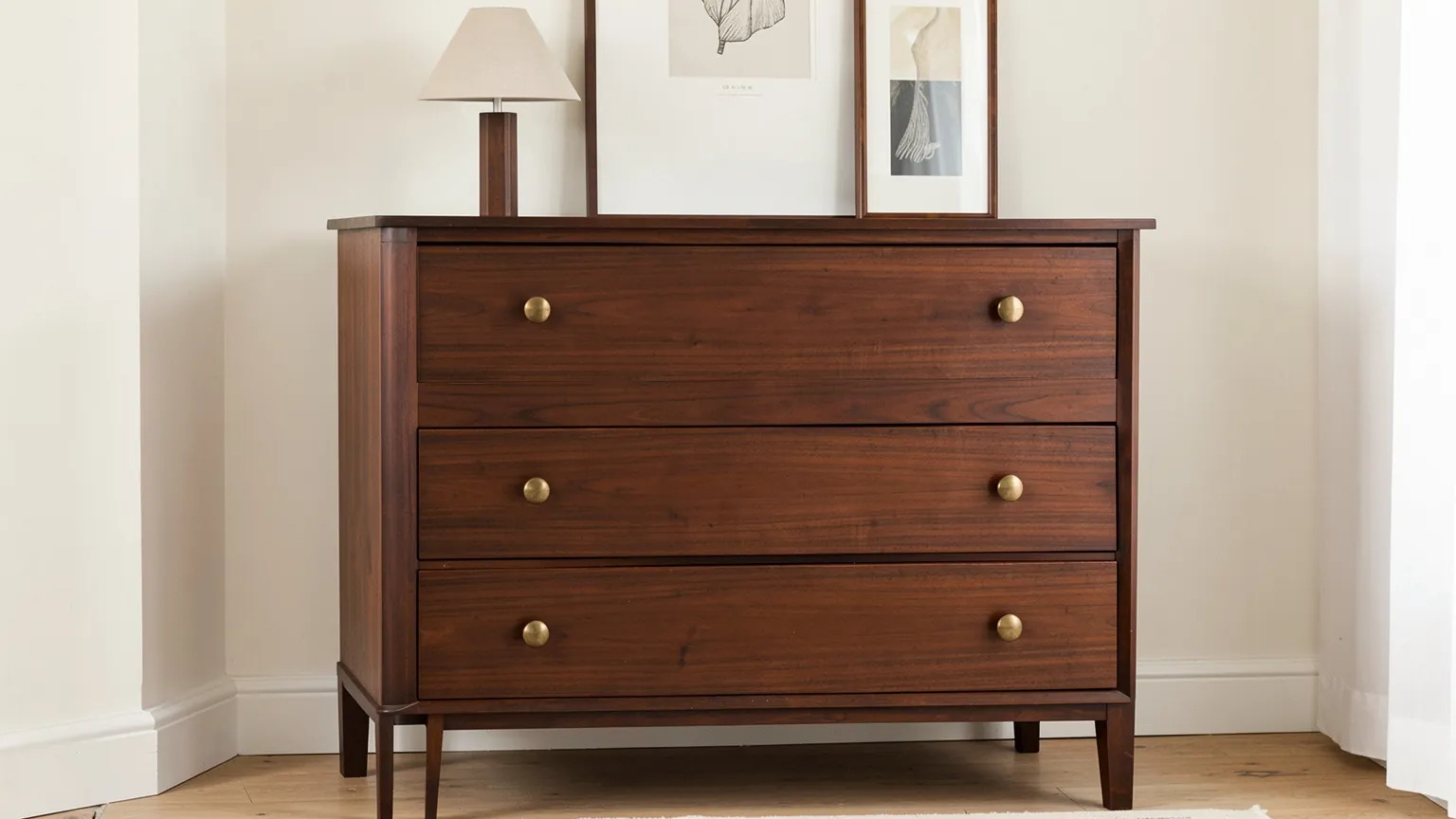
Stag Minstrel is a range of bedroom and dining furniture made by the Stag Cabinet Company of Nottingham. According to the Victoria and Albert Museum, Minstrel was brought out in 1963 as a later version of the Madrigal range designed by John and Sylvia Reid. It is usually mahogany or mahogany veneer in a dark finish, with simple brass knobs or handles, and some pieces have carved door fronts. Look for a Stag stamp or mark with the company's stag motif inside the top drawer or on the back. Most Minstrel pieces date from the 1960s and 1970s.
Minstrel turns up often in British second-hand shops and online listings, which makes it affordable, and also means the name is sometimes used loosely.
Key facts
| What the sources say | |
|---|---|
| Maker | Stag Cabinet Co. Ltd, Haydn Road, Nottingham |
| Designers | John and Sylvia Reid (Madrigal, about 1959 to 1960, and its later version, Minstrel) |
| Introduced | 1963, according to the V&A |
| Made until | Into the 1970s at least; one valuation guide says the 1980s |
| Wood | Mahogany or mahogany veneer, usually in a dark factory finish |
| Hardware | Brass knobs; some pieces with ring pulls |
Madrigal and Minstrel
The V&A holds a series of Stag design drawings and catalogues given in 1978. One drawing, for a Madrigal dressing table and bed-head unit by Sylvia and John Reid, is dated about 1959 to 1960. It came with a catalogue and price list for the Minstrel range, which the museum describes as "a later version of the 'Madrigal' range brought out in 1963", and photographs of Minstrel pieces as produced. Minstrel was therefore a development of an existing Reid design rather than a new design from scratch.
The same series includes drawings for Stag's "A" range of 1955, made by the company's own design studio in Nottingham, with wardrobes, a headboard, cupboards and chests of drawers.
How to identify a Minstrel piece
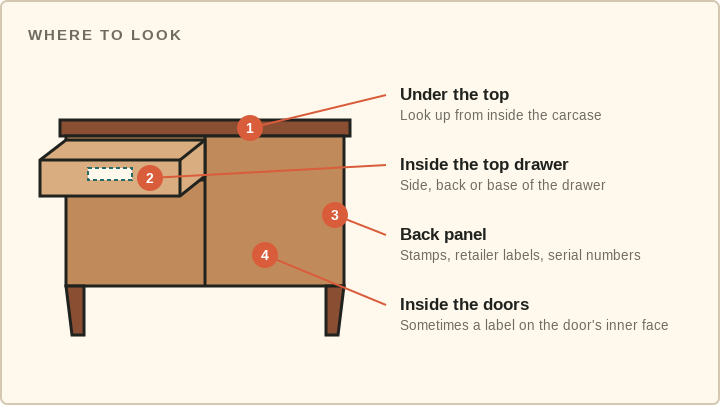
- Look for the Stag mark. Check inside the top drawer and on the back panel. The V&A describes the company's stamp on its own drawings as including a stag motif and the company address. Labels and stamps can be lost, so a missing mark does not rule a piece out.
- Check the wood and finish. Minstrel is mahogany, usually veneer on the large surfaces, in a dark reddish-brown factory finish. A pale or stripped finish may have been refinished.
- Check the hardware. Brass knobs on drawers and doors, or brass ring pulls. Replaced handles are common and affect value.
- Check the form. Clean, simple lines and solid construction. Some sideboards have carved door fronts.
- Compare with the range. Recorded pieces include chests of drawers (including three-drawer chests, tallboys and wide multi-drawer chests), dressing tables, bedside cabinets, wardrobes, headboards, sideboards, dressers with open bookcase tops, low sideboards and extending dining tables.
Minstrel or not?
Stag made other ranges alongside Minstrel, and "Minstrel" is sometimes used in listings for any dark Stag bedroom furniture. If you need to be sure, compare the piece with a Minstrel catalogue illustration or a documented example rather than relying on a listing title.
Dating a Stag piece
Minstrel cannot predate 1963. Pieces without a Minstrel catalogue match but in a similar style may belong to the earlier Madrigal range of about 1959 to 1960. Dealers usually date Minstrel pieces to the 1960s or about 1970. None of the sources we found gives an end date for the range: the valuation guide Relic says it was produced into the 1980s, but does not cite evidence.
Stag in outline
Grace's Guide records the Stag Cabinet Company as founded in 1906 by Cyril Alstead and Leonard Levy, and incorporated in Nottingham in 1914 by the Radford family, who also owned the Stag motorcycle and engine company. It was in Sherwood, Nottingham, during the First World War, and later at Haydn Road. In 1949 it acquired a nearby factory for making radio cabinets. It introduced a Savanna range at the Furniture Show in 1967, and in 1972 shares were issued in Stag Furniture Holdings, its parent company.
What it is worth
Minstrel is affordable compared with designer furniture. Relic gives a typical range of $300 to $500 for a chest of drawers. Condition of the veneer, the original dark finish and a full set of original handles make the most difference, and many pieces are now painted or upcycled, which removes their value as originals.
For other British makers, see G-Plan labels and McIntosh of Kirkcaldy. For labels in general, see how to identify vintage furniture labels and maker marks, and for construction, veneer or solid wood. Record what you find with the object research checklist; more guides are in collecting and buying.
Related guides
- Robin Day at Hille: the Hillestak and Polypropylene chairs
Common questions
When was Stag Minstrel made?
The V&A dates the Minstrel range to 1963, when it was brought out as a later version of the Madrigal range. Most pieces on the market date from the 1960s and 1970s.
Who designed Stag Minstrel?
Minstrel developed the Madrigal range designed by John and Sylvia Reid for the Stag Cabinet Company, and the V&A credits the Reids with the design.
How do I know if my furniture is Stag?
Look inside the top drawer and on the back for a Stag stamp or label with a stag motif. Then check for mahogany or mahogany veneer in a dark finish and brass knobs or handles.
Is Stag Minstrel solid wood?
Valuation guides describe it as mahogany veneer in a dark factory finish. Veneer was normal for good-quality furniture of the period and is not a sign of a lesser piece.
References
- Drawing for a 'Madrigal' dressing-table and bed-head unit, by Sylvia and John Reid, for Stag Cabinet Co. Ltd, about 1959 to 1960, E.110-1978, Victoria and Albert Museum
- Drawing for a dressing table, 'A' range, Stag Cabinet Co. Ltd Design Studio, 1955, E.109-1978, Victoria and Albert Museum
- Stag Cabinet Co, Grace's Guide
- Stag Minstrel chest of drawers value guide, Relic